Roof Water Damage Repair in San Francisco, CA
A roof leak soaks the attic, insulation, and ceiling before a stain ever shows on your living-room ceiling. We find where the water went, dry it out, tarp the leak so it stops, and document the whole loss for your insurance claim.
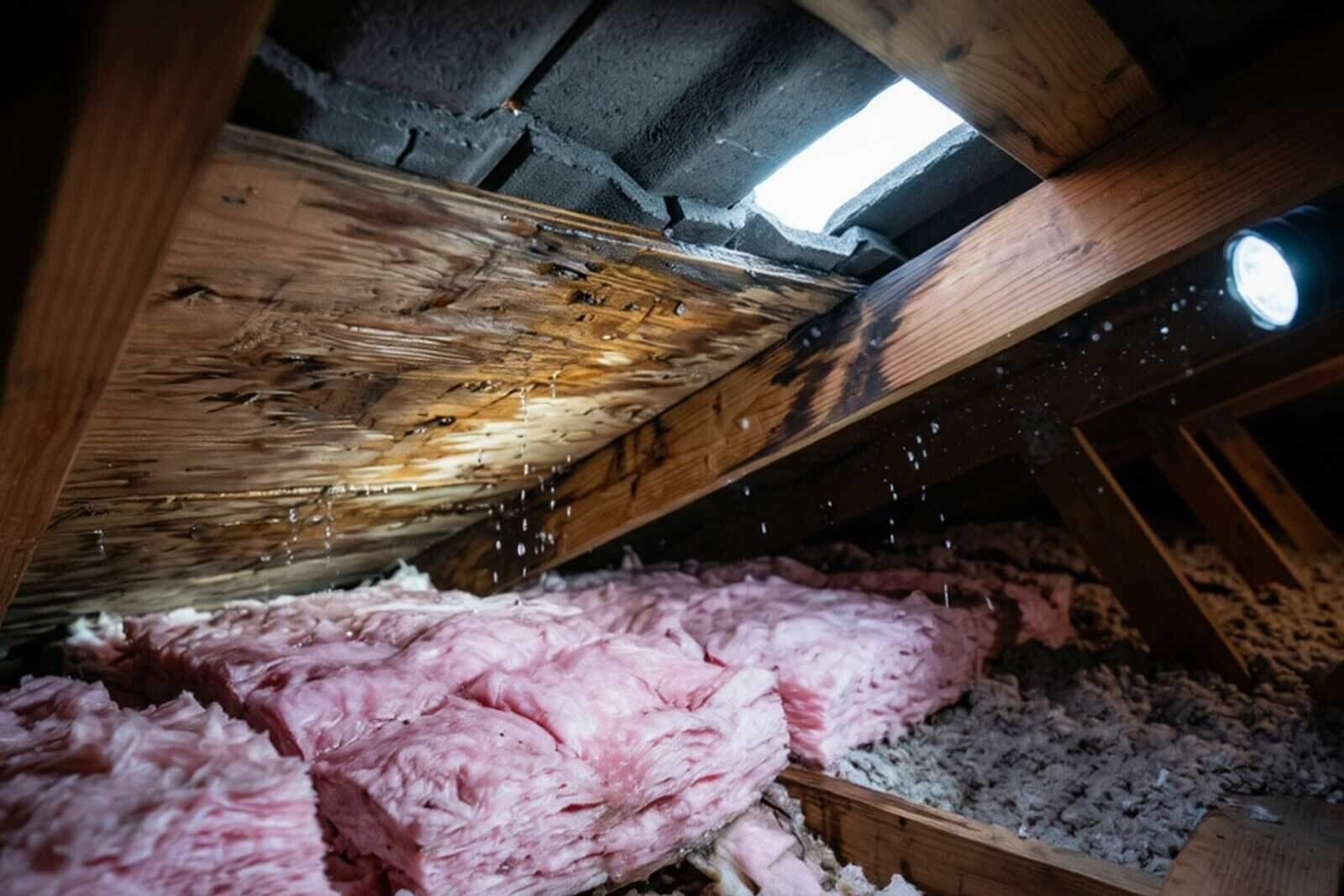
A roof leak does its real damage inside the house — in the attic, the insulation, and the ceiling cavity — long before a stain shows up. We tarp the breach so it stops raining indoors, dry everything the water touched, and document the loss for your claim. On-site across San Francisco fast, 24/7.
How roof leaks damage your San Francisco home
San Francisco's roofs take their punishment during the October-to-April rainy season, when atmospheric rivers push days of steady rain across the city. The damage tends to follow the building stock. The low-slope and flat roofs common on Mission and Richmond District flats pond water and find every aging seam, while clogged gutters and roof valleys — packed with debris after a dry summer — back water up under the edge of the roofing. Skylights and their flashing are a frequent entry point, and on the city's many hillside homes, water that gets in at the high side runs along the framing before it drops through a ceiling somewhere else. What all of these share is that the leak does its damage out of sight: water soaks the attic decking, mats down the insulation, and saturates the top of the ceiling cavity long before a stain appears below. By the time you see the ring on the ceiling, the materials above it have been wet for a while.
What our roof water damage repair includes
One Bay Area crew that stops the intrusion and dries the inside — not a roofer, not a wait-and-see:
- Emergency tarping — a tarp over the breach stops the active leak right away, so it isn't raining inside while you wait on a roofer.
- Attic & insulation drying — we pull soaked insulation that can't be saved and get airflow on the decking and rafters before mold starts in the dark.
- Ceiling & cavity drying — we relieve a bulging ceiling on our terms, then dry the drywall and the space above it to a moisture reading, not a guess.
- Claim documentation — moisture readings and photos of the source and wet materials, written up and worked directly with your insurer.

Our roof water damage process
- Find the leak & stop the intrusion
We trace the water from the stain back to where it's actually entering, check the attic, and tarp the breach so it stops raining inside.
- Protect the room & relieve the ceiling
We cover and move what we can, then controlled-drain a bulging ceiling so it lets down on our terms instead of collapsing on your furniture.
- Extract & remove saturated materials
We pull standing water, lift sodden insulation that can't be saved, and open small, neat inspection cuts where the cavity needs airflow.
- Dry, document & hand off repairs
Air movers and dehumidifiers run until meters read dry; we log the readings for your claim, then repair the drywall, insulation, and paint.
Attic, insulation & ceiling drying
The attic is where a roof leak hides the most damage, and it's the part a quick patch leaves wet. When water comes through the roof, it lands on the decking and the top of the insulation first, then works down into the ceiling cavity. We pull insulation that's matted and sodden — once it's soaked it loses its R-value and won't recover, so it comes out and gets replaced — and get air movers on the decking and rafters before mold takes hold in that dark, unventilated space. In San Francisco's damp air, attic framing can hold moisture for days after the rain stops, so we dry to a meter reading rather than calling it done when the drips stop. Below the attic, we dry the ceiling cavity and the back of the drywall, then refinish only once the numbers confirm it's dry. If the water tracked down into the walls and floors, our structural drying reaches those, and the visible ceiling water damage gets repaired and stain-blocked so the ring can't bleed back.
Why measured drying beats painting over the stain
- The leak and the stain are usually in different places — chasing the visible water alone leaves wet attic and insulation behind, and the stain comes back the next time it rains.
- Soaked attic decking and insulation stay damp for days in San Francisco's marine air, rotting wood and growing mold where nobody looks until it smells.
- We measure moisture in the materials, not just the air, and call it dry when the meter says so — something a fresh coat of paint can't do.
Frequently asked questions
What should I do about water coming through the ceiling during heavy rain?
Move what you can out from under it, put a bucket down, and call us — we answer 24/7. If the ceiling is bulging and holding water, keep people away; a heavy bulge can let go without warning. If you can do it safely, poke a single drain hole at the lowest point of the bulge into a bucket — that relieves the weight in a controlled way instead of the whole sheet collapsing. Don't go up into a wet attic with the power on, and don't touch a light fixture with water around it. We'll trace the leak, tarp it, and start drying when we arrive.
Do you repair the roof itself or the interior water damage?
We repair the interior water damage — the wet attic, insulation, ceilings, walls, and floors — and we install an emergency tarp that stops the active leak right away. The permanent shingle, flashing, or flat-roof membrane repair on the roof is a roofer's job, and we don't claim to be a roofing company. In practice we handle everything the water touched inside the house and coordinate the timing so the roof is sealed before we rebuild and repaint the ceiling we dried. If you don't have a roofer, we can point you toward the right next call.
Will insurance cover roof leak water damage?
Sudden, accidental interior water damage from a roof leak is often covered under a standard California homeowner's policy, while damage blamed on long-deferred maintenance or a worn-out roof is frequently disputed. We document the loss from the first walkthrough — moisture readings, photos of the source and the wet materials — and work directly with your insurer. What's ultimately covered, and your deductible, are your carrier's call; thorough documentation gives the claim its best footing.
My flat roof leaks every rainy season — can you help between the rains?
Yes. The low-slope and flat roofs on a lot of San Francisco flats pond water and tend to leak in the same spots each rainy season. We can dry out the interior damage from the last leak and tarp the breach to get you through the wet months, and we'll document where the water is entering so your roofer can make the permanent fix when the weather breaks. Drying it properly between leaks matters here — wet attic framing and insulation that never fully dries in our damp air is exactly where recurring mold starts.
Water coming through the ceiling right now?
A roof leak floods the attic and ceiling cavity first, where you can't see it. A Bay Area crew answers 24/7 and can be tarping the leak and pulling water fast.
Call (650) 642-7300Licensed, insured & trained to industry standards


Stop the leak inside before it spreads
A roof leak gets worse with every hour it sits in the attic and ceiling. Tell us what's happening and a Bay Area crew will be on the way to tarp it and start drying.
Call (650) 642-7300