Hardwood Floor Water Damage Repair in San Francisco, CA
Water on a hardwood floor cups and buckles the boards within a day or two. We dry them in place with sealed floor-mat systems and moisture readings — and in many San Francisco homes that saves the original fir or oak instead of replacing it.
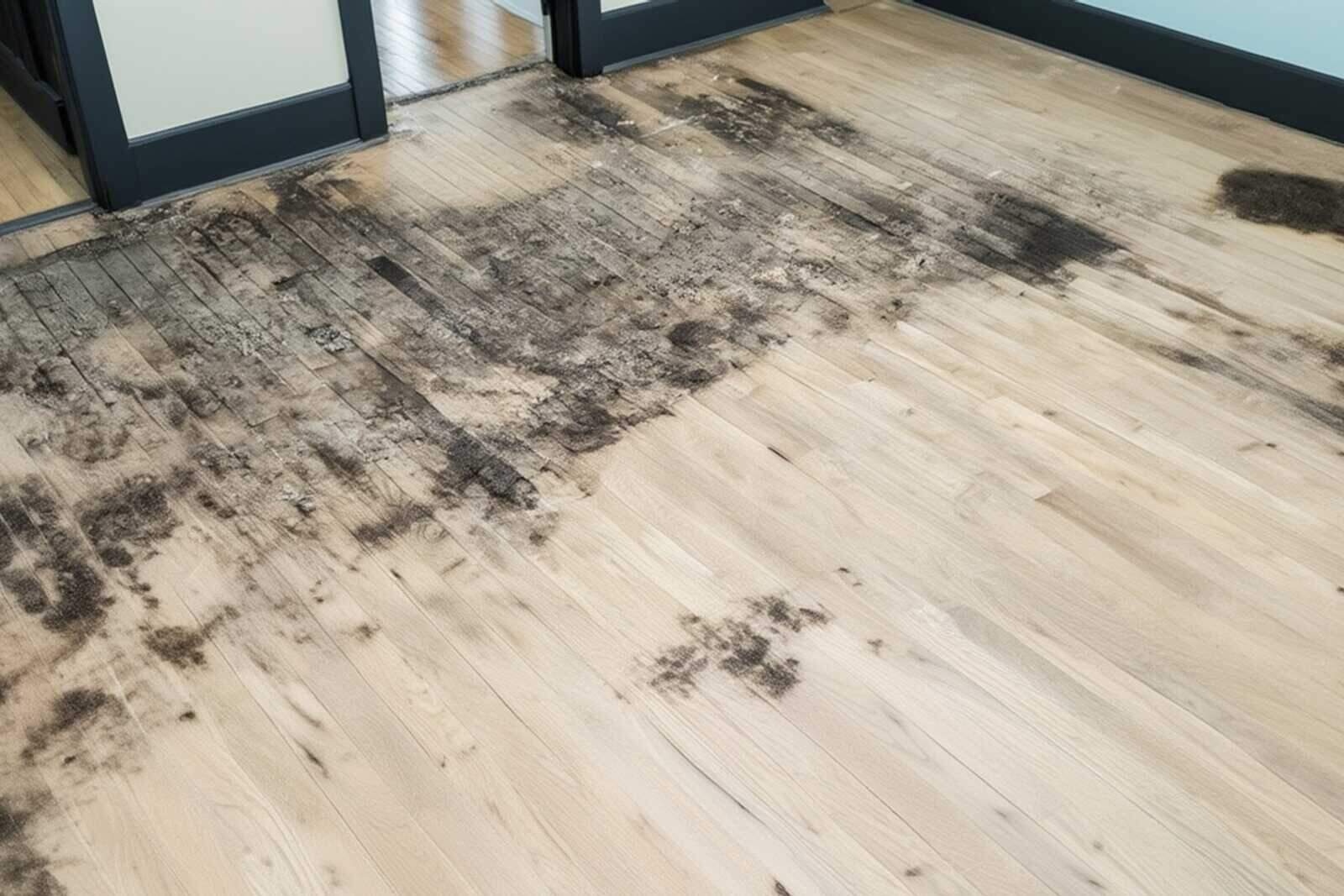
Cupped hardwood can often be dried and saved — but only if drying starts in the first day or two. We pull the water, seal floor-drying mats to the boards, and read moisture until the wood comes back to normal, instead of tearing the floor out. That matters more here than most places: a lot of San Francisco floors are narrow-plank old-growth fir or oak that no big-box store can match.
Cupping, buckling and warping explained
Hardwood damage shows up in a predictable order, and the stage tells us how aggressive the drying has to be. Cupping comes first — the edges of each board rise higher than the center as the underside drinks water and swells. Crowning is the reverse, a board high in the middle, and it usually means the floor was sanded or dried wrong before the wood was actually dry. Buckling is the worst case: boards lift clear off the subfloor, sometimes popping nails and tenting at the seams. The earlier we read the floor, the more of it stays in the "just cupped" range, where mat drying reverses it — once boards buckle off the subfloor, those sections usually have to be replaced.
What our hardwood floor drying includes
Hardwood is a specialty here, not an afterthought — the gear and the readings are built to dry the boards from below:
- Specialized floor-drying mat systems — sealed mats and panels pull water out from inside the wood with negative pressure, the part that actually reverses cupping.
- Moisture mapping of boards and subfloor — penetrating and non-penetrating meters show how wet each plank is and whether the subfloor and joists soaked through.
- A straight save-or-replace assessment — we measure how long the water sat, how deep it reached, and the finish before telling you what's realistic — not a sales pitch.
- Sanding, refinishing & documented loss — once dry we sand out residual cupping and refinish, match and swap boards where buckling went too far, and document it for your claim.
Can your San Francisco hardwood floors be saved?
Often, yes — and we'd rather dry your floor than replace it, because matching an old San Francisco floor is hard and expensive. Many Victorians and Edwardians on the Peninsula and in Noe Valley, Bernal Heights, and Glen Park still have their original tongue-and-groove fir laid over plank subfloors. That wood is dense and slow to release moisture, but it dries well when the water is pulled from below before it sits. The honest exceptions are boards that buckled clear off the subfloor and engineered planks whose wear layer has delaminated — those sections need replacing, and pretending otherwise just buys you a re-cupped floor in a month. We read the moisture and the finish first, then tell you which case you're actually in.
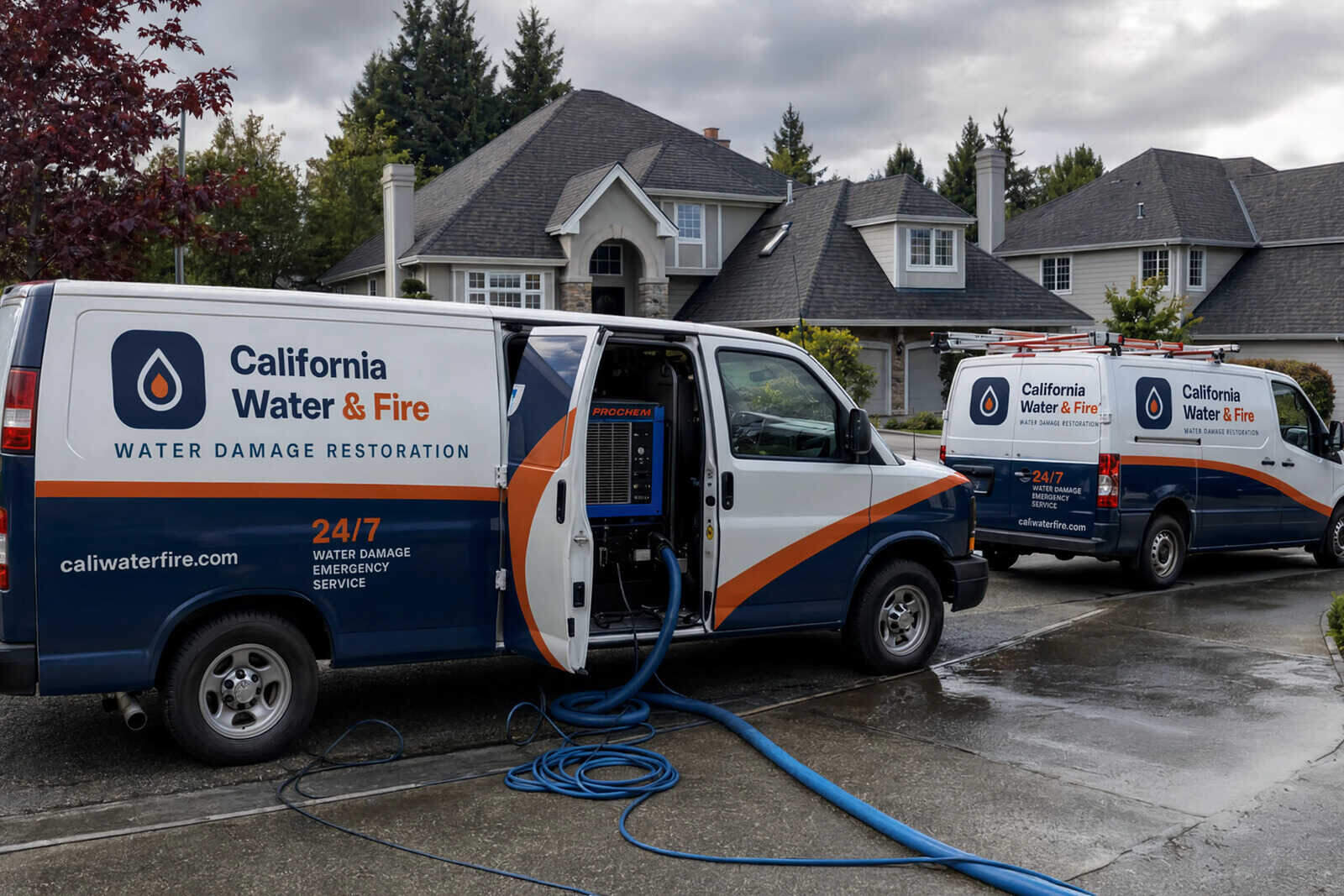
Our specialized floor drying process
- Extract the standing water first
We pull the surface water with extraction tools so the boards aren't sitting in it — fast water removal stops the damage spreading down through the planks.
- Map moisture in the wood and subfloor
Meters tell us how wet each board is, how far the water spread, and whether the subfloor and joists are soaked — that sets the drying target instead of a guess.
- Set the specialized hardwood drying system
We seal mats to the surface and pull moisture from inside the wood with negative pressure, paired with low-grain dehumidifiers that hold the room dry against the coast's damp air.
- Monitor daily, then finish the floor
We re-read until the planks hit a stable, normal moisture content — pulling gear early causes crowning — then sand, refinish, or match and swap boards as needed.
Why measured drying beats fans on top
- Fans dry the surface while the water trapped under the planks keeps cupping the boards — only mats that pull from below actually reverse it.
- San Francisco's cool, fog-damp air won't pull water out of dense old wood on its own — it has to be driven out with controlled drying and a dehumidifier, or the floor just stays wet under a dry-looking surface.
- Stopping when the floor looks dry is what causes boards to crown or re-cup weeks later — we hold until the meter reads stable.
Frequently asked questions
Can water-damaged hardwood floors be dried instead of replaced?
Often, yes — especially if drying starts within the first day or two. A floor that's cupped from water underneath can frequently be dried in place with sealed mat systems and brought back, then sanded and refinished if needed. The honest exceptions are boards that buckled clear off the subfloor and engineered planks whose wear layer has delaminated; those sections usually need replacing. We measure the moisture and the finish before we tell you which case you're in, so the call is based on readings, not a guess.
How long does it take to dry hardwood flooring after a leak?
Most hardwood drying runs longer than carpet or drywall — commonly five days to two weeks, sometimes more, depending on how much water soaked in, how thick the boards are, and how wet the subfloor underneath got. Wood gives up moisture slowly, and San Francisco's cool, damp air works against it, which is why we use sealed floor-drying systems and check the moisture content daily rather than guess from how the floor looks. We don't pull the equipment until the planks read at a stable, normal level — stopping early is what causes the boards to crown or re-cup weeks later.
Will my insurance cover drying the hardwood floor?
It depends on your policy and the cause, but sudden, accidental water — a burst supply line or a failed appliance — is commonly covered, while long-term seepage often isn't. We can't promise what your carrier will pay, but we document the loss with moisture readings and photos from the first visit, which is exactly what an adjuster wants to see, and we work directly with your insurer. Call us and we'll walk you through what we'd record for your claim.
My floor is original fir in an old San Francisco home — can you match it?
That's exactly why we push to dry rather than replace. The narrow-plank old-growth fir and oak in many of the city's Victorians and Edwardians is dense, tight-grained, and nearly impossible to source new, so even a "perfect" board swap rarely disappears completely. When boards have to be replaced, we salvage matching stock from closets or under appliances where we can and blend the finish across the repair. But the best outcome is keeping the original wood — which is why fast, measured drying of the boards you still have is the whole point.
Boards starting to cup or lift?
The first 24–48 hours decide whether hardwood gets dried in place or torn out. A Bay Area crew answers 24/7 and can have drying equipment on your floor today.
Call (650) 642-7300Licensed, insured & trained to industry standards


Catch the floor before it buckles
Cupped hardwood can often be dried and saved — but the window is the first day or two. Tell us what happened and a Bay Area crew will be on the way with drying equipment.
Call (650) 642-7300