Ceiling Water Damage Repair in San Francisco, CA
A brown ring, a bubbling patch, or a sagging spot on the ceiling means water is sitting in the cavity above it. We trace the leak, dry the structure, and repair the water-damaged ceiling — moisture readings room by room, documented for your claim.
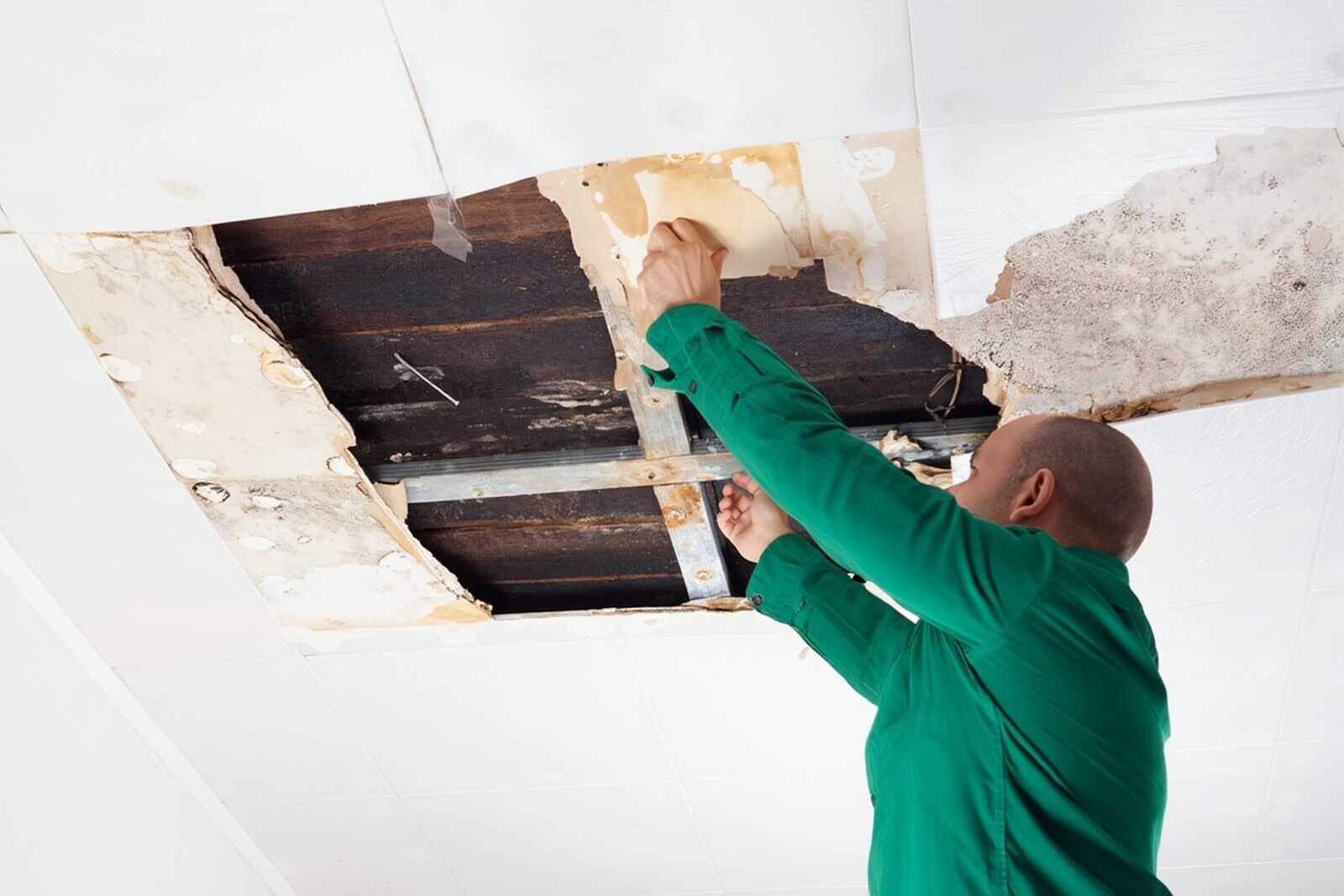
Ceiling water damage repair starts above the stain, not on it. We find the leak overhead, dry the cavity and framing, and refinish the ceiling so the ring doesn't bleed back — and a Bay Area crew can usually be on-site fast, 24/7.
Common causes of ceiling water damage in San Francisco homes
Water on the ceiling almost always comes from directly above it, and in San Francisco that source falls into a few familiar patterns. In the multi-level flats common to the Marina and Pacific Heights, the most frequent culprit is the upstairs bathroom — a failed wax ring under a toilet, a leaking shower pan, or a supply line behind the wall, dripping down through the floor into the ceiling below. Aging galvanized and cast-iron plumbing in pre-war buildings corrodes and seeps at the joints. During the October-to-April rainy season, a roof leak or a clogged valley sends water down through the attic and into the top-floor ceiling. We also trace ceiling stains back to a sweating or overflowing HVAC condensate line. Whatever the source, the fix has to address it first — there's no point drying a ceiling that's still being fed.
What our ceiling water damage repair includes
One Bay Area crew from the leak above to the finished ceiling — not a paint-over that bleeds back through:
- Leak-source tracing — we pinpoint the upstairs bath, roof, supply line, or HVAC drip feeding the stain before we open anything, so the fix lands where the water actually is.
- Safe water relief — a sagging ceiling holding pooled water gets released in a controlled way instead of dropping on its own.
- Cavity drying with moisture checks — we dry the framing, insulation, and back of the plaster or drywall, and confirm it's dry on a meter, not just to the touch.
- Drywall repair & insurance documentation — we replace, re-tape, texture, and stain-block the ceiling, with readings and photos logged for your claim.
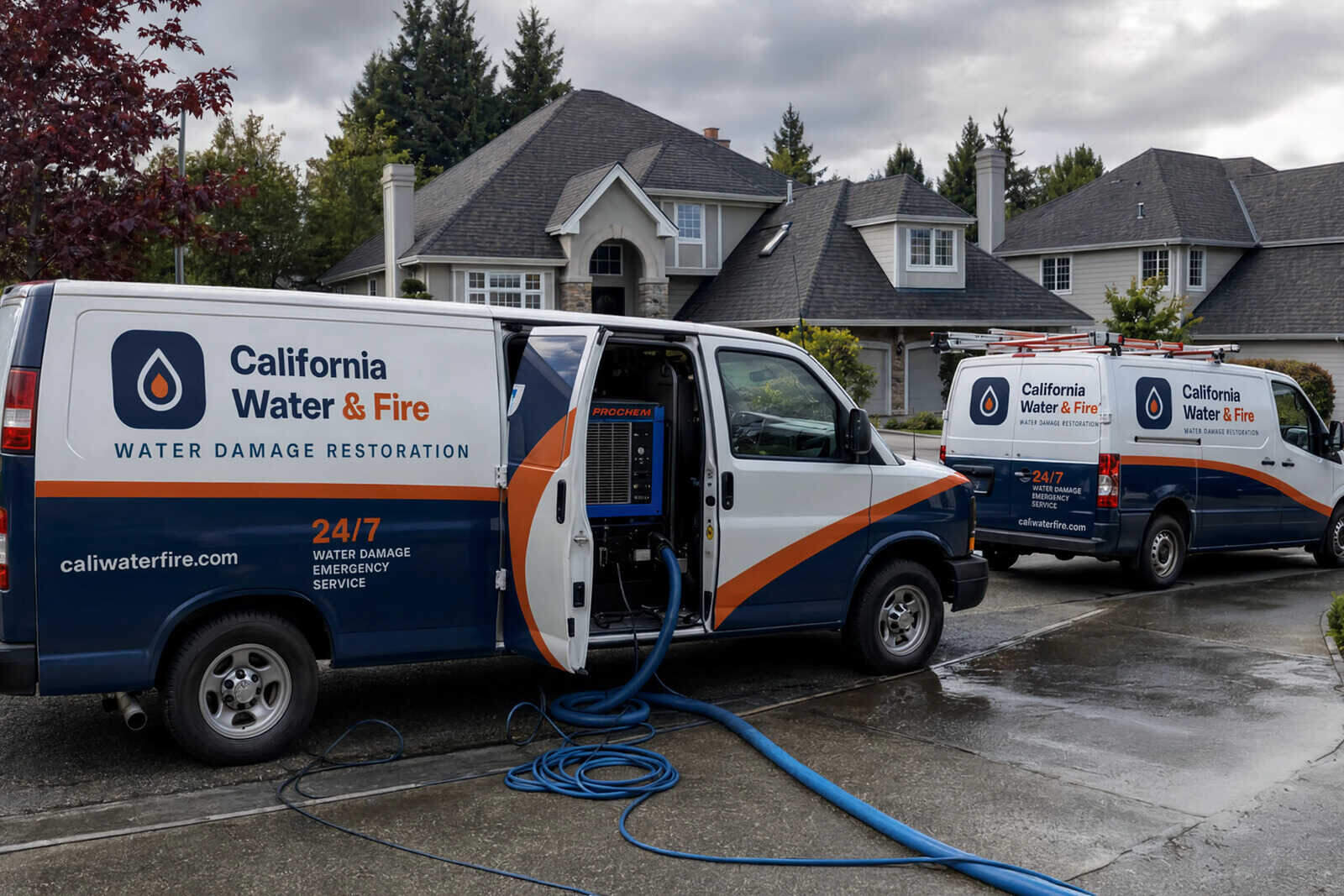
Repairing a water-damaged ceiling
- Find and stop the source
We trace the leak to its origin above the ceiling — plumbing, roof, or HVAC — and stop the water, because there's no point drying a ceiling that's still being fed.
- Relieve trapped water safely
If the drywall is sagging or holding pooled water, we release it in a controlled way rather than waiting for a loaded ceiling to drop on its own.
- Dry the cavity above the drywall
We open or vent the ceiling as needed and dry the framing, insulation, and back of the drywall, confirming with meters that the structure reads dry.
- Repair and refinish
Once the cavity is genuinely dry, we replace damaged drywall, re-tape, texture to match, and prime with a stain-blocking sealer so the old ring can't bleed through.
Hidden damage above the ceiling
The stain you can see is the smallest part of the problem. By the time water reaches the back of the drywall and shows through the paint, it has already passed through the insulation and the framing above. In a Bernal Heights cottage or a Mission flat with lath-and-plaster ceilings, that water soaks into the lath and the joists and sits there — and in San Francisco's cool, damp air, materials hold that moisture for days. Left alone, the wet framing warps and the insulation mats down and loses its R-value, while mold gets its head start in the dark space above the ceiling where nobody's looking. That's why we dry the cavity to a meter reading and check the joists and insulation, not just the drywall surface. If the water tracked further than the ceiling, our structural drying reaches the walls and floors it touched, and if it sat long enough to start growth, our mold removal and remediation handles the cleanup.
Why a measured repair beats painting over the stain
- Painting a wet ceiling just hides the stain until it bleeds back through, usually within a few weeks — the cavity above is still soaked.
- Hidden moisture in the insulation and joists is what warps wood and, in San Francisco's damp marine air, gives mold its head start above the drywall.
- We refinish only after the readings say the structure is dry, and document those numbers — something a quick patch can't show your insurer.
Frequently asked questions
Is a water-stained ceiling a sign of a bigger problem?
Usually, yes. A stain on the ceiling means water reached the back of the drywall, which means it already passed through the insulation and framing above it. Even if the surface looks dry now, the cavity can still hold moisture — and in San Francisco's damp air, that's where mold starts. It's worth checking the source and taking a moisture reading before deciding it's only cosmetic, because a fresh or spreading ring almost always points to an active leak overhead.
Can a sagging or bubbling ceiling be saved?
Sometimes the drywall can be dried and saved, and sometimes it has to be replaced — it depends on how long the water sat and how far the sag has gone. A lightly bubbled spot caught early often dries out and refinishes cleanly. Drywall that's sagging, holding pooled water, or has lost its integrity needs to come down for safety, because a loaded ceiling can drop without warning. We'll tell you honestly which one you're looking at after we see it, rather than guessing over the phone.
Will insurance cover ceiling water damage?
It depends on your policy and the cause, but a sudden leak — a burst supply line or a failed fixture above the ceiling — is often covered, while long-term seepage someone left unaddressed frequently isn't. We can't promise what your insurer will approve, but we document the source, the moisture readings, and every repair step so you have what a claim needs. If you're filing, tell us up front and we'll keep the paperwork in mind from the first visit.
The leak is from the unit above me — what can you do?
This is common in San Francisco's flats and multi-unit buildings, where one home's ceiling is another's floor. We can stop the active water, relieve a sagging ceiling, and dry your side right away — you don't have to wait on the upstairs neighbor to act before we protect your unit. We'll document the source and the damage from the first walkthrough, which matters when more than one policy or owner is involved. If access to the unit above is needed to find the source, we'll help coordinate it.
Ceiling sagging or dripping right now?
A bulging ceiling holds pooled water and can let go without warning. A Bay Area crew answers 24/7 and can find the source, relieve the water, and start drying fast.
Call (650) 642-7300Licensed, insured & trained to industry standards


Repair the ceiling and the leak above it
A stained or sagging ceiling only spreads while the water sits. Tell us what you're seeing and a Bay Area crew will be on the way.
Call (650) 642-7300