Burst Pipe Water Damage Restoration in San Francisco, CA
A burst supply line can put hundreds of gallons through your walls and floors before you find the shutoff. We extract the water, open and dry the wet cavities, and document the loss for your claim — a Bay Area crew on the way 24/7.
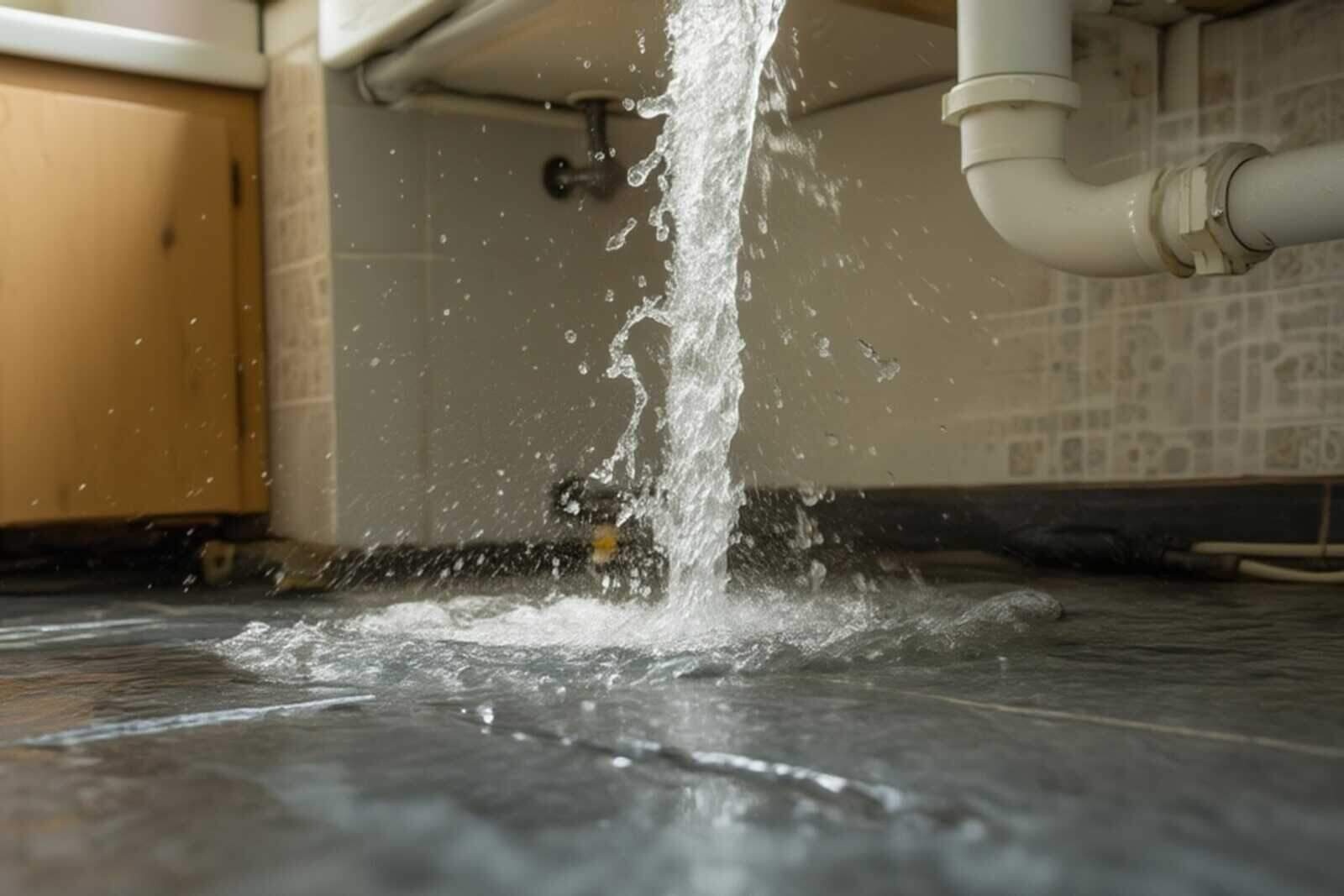
A failed supply line under pressure soaks far past the wet spot you can see — often behind lath-and-plaster walls or down through the framing to the floor below. We get the water out fast, find everywhere it traveled, and dry the structure to the readings, so nothing gets sealed up wet to rot framing or grow mold later.
Why pipes burst in San Francisco homes
In San Francisco, pipes fail from age and corrosion, not cold. Much of the city's housing stock is decades old, and the plumbing behind the plaster often is too: galvanized-steel supply lines that have rusted and narrowed from the inside for fifty or more years, cast-iron drains that crack, and corroded brass and copper fittings that finally give way. Homes re-plumbed in the 1980s and 90s sometimes hide polybutylene supply lines, which grow brittle and split at the joints. On top of the aging material, San Francisco's water pressure runs high in many neighborhoods — a worn line, a failed pressure-regulating valve, or a tired washing-machine hose lets go under that pressure, and a second-floor or in-wall break sends water straight down through the cavities. Water heaters are the other common culprit: a corroded tank or a failed temperature-and-pressure valve can empty its contents across a floor.
What our burst-pipe cleanup includes
One San Francisco crew, 24/7, sized to the loss — from the standing water to the moisture hiding in the wall:
- Emergency extraction, same visit — truck-mounted and portable extractors pull the bulk water fast, with the capacity to clear a flooded lower level, not just a damp closet.
- Full moisture mapping — meters and thermal imaging trace the wet path behind baseboards, inside wall cavities, and under the subfloor, where burst-pipe water rarely stays put.
- Structural drying to the standard — controlled openings release trapped water, then air movers and dehumidifiers run until the materials read dry, not just dry to the touch.
- Insurance documented, handled direct — photos, daily moisture readings, and a written scope for your carrier, with the drywall, plaster, and flooring we opened repaired back to whole.
What to do the moment a pipe bursts
- Shut off the water at the main
Find your main valve — usually near the meter at the front of the house, in the garage, or in a ground-floor utility area — and turn it off. That stops the source no matter where the line broke.
- Cut power to the wet area
If you can reach the panel safely, kill power to any flooded room before you step into standing water — many San Francisco garages and ground-floor units have outlets at floor level.
- Move what you can and photograph it
Lift belongings off the wet floor, then photograph the damage before cleanup — that record helps your claim.
- Call us once the water's off
Tell us what failed and a Bay Area crew heads over; we can usually be on-site and extracting the same visit, traffic depending.
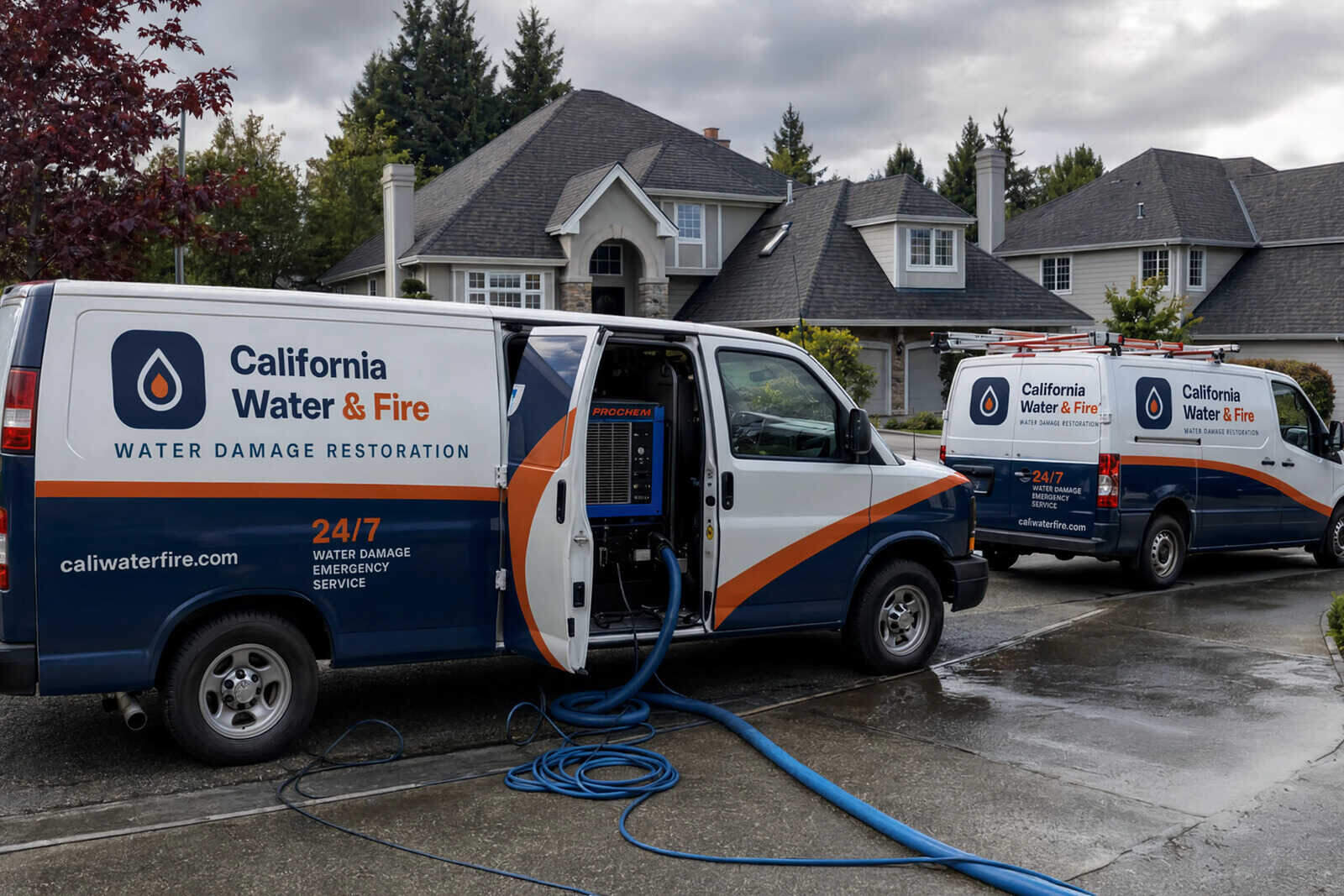
Our burst-pipe cleanup & drying process
- Stop the source & make it safe
We confirm the water is off, check for electrical hazards, and identify the failed line — a corroded galvanized run, a split polybutylene joint, a worn fitting, or a failed hose — so it doesn't release again mid-job.
- Extract the standing water
Truck-mounted and portable extractors pull the bulk water, working from the lowest, wettest areas outward across the affected level.
- Find where the water traveled
Moisture meters and thermal imaging map the wet path behind plaster and baseboards and under the subfloor, so nothing soaked stays hidden.
- Open, dry, document & restore
We make controlled openings, set air movers and dehumidifiers, log readings daily until dry, then repair what we opened and document the loss for your insurer.
Burst pipe damage and your insurance
Sudden, accidental pipe breaks are among the most commonly covered losses on a standard California homeowner's policy — a supply line that lets go and floods your floors is exactly the kind of event most policies are written for. The wrinkle is usually the cause: insurers generally cover the sudden break and the resulting water damage, but they may not pay to replace the corroded pipe itself, and damage from a leak that was seeping unaddressed for months is often treated as maintenance rather than a covered loss. We can't decide your coverage — what's covered and your deductible are your carrier's call — but we document the loss from the first hour with photos and daily moisture readings and work directly with your insurer, which is what gives a claim its best footing. We'll walk you through exactly what we'd record.
Why measured drying beats a wet-vac and box fans
- A box-store wet-vac pulls the water you can see and leaves the water hiding in the wall cavity and subfloor — the part that rots framing and grows mold.
- In San Francisco's cool, damp air, fans alone just push moist air across a wet wall while mold gets a head start — drying needs a dehumidifier creating air drier than the materials, and old lath-and-plaster holds water long after the surface looks dry.
- Opening walls and pulling flooring yourself is guesswork without a meter — we read where the moisture went first, so we open only what's actually wet.
Frequently asked questions
What should I do the moment a pipe bursts in my San Francisco home?
Shut off the water at your main valve first — it's usually near the meter at the front of the house, in the garage, or in a ground-floor utility area, and turning it off stops the source no matter where the break is. Then cut power to any flooded area if you can reach the panel safely, move what you can off the wet floor, and photograph the damage before you clean up. Call us once the water is off; we'll be on the way and can usually reach you the same visit, traffic depending.
Does insurance cover burst pipe water damage in California?
Sudden, accidental pipe breaks are among the most commonly covered losses on a standard California homeowner's policy. The usual caveat is the cause: insurers generally cover the sudden break and the resulting water damage, but they may not pay to replace a corroded pipe, and damage from a slow leak that went unaddressed for months is often treated as maintenance rather than a covered loss. We document the loss from the first hour and work directly with your insurer, but what's covered and your deductible are your carrier's call; thorough documentation is what gives the claim its best footing.
How do you dry out walls and floors after a pipe break?
We start by mapping where the water actually went with moisture meters and thermal imaging — burst-pipe water travels far behind plaster and baseboards, inside wall cavities, and under the subfloor. We make controlled openings to release trapped water, then run air movers and dehumidifiers sized to the space and check the moisture readings every day. We keep drying until the materials themselves read dry, not just the surface, so nothing gets closed up wet to grow mold later.
Why do pipes burst in older San Francisco homes?
It comes down to age and corrosion. In the Bay Area's mild climate, pipes fail because the material has worn out, not because of weather. Many of the city's homes still run decades-old galvanized-steel supply lines that rust and narrow from the inside until they fail, along with cast-iron drains that crack and corroded fittings that give way. Homes re-plumbed in the 1980s or 90s sometimes have polybutylene lines that turn brittle and split at the joints. High household water pressure in some neighborhoods, plus tired washing-machine hoses and aging water heaters, finishes the job — and a break on an upper floor or inside a wall sends water straight down through the cavities.
Pipe burst and water still spreading?
Shut off your main if you can, then call. Every hour the water sits, it wicks deeper into drywall and subfloor — a Bay Area crew answers 24/7 and can be extracting the same visit.
Call (650) 642-7300Licensed, insured & trained to industry standards


Get a burst pipe handled before it spreads
A pressurized line keeps soaking your home until the water's off and the drying starts. Tell us what burst and a Bay Area crew will be on the way.
Call (650) 642-7300